
shiptown A/S · Fredericia, Denmark Low-cost green hydrogen. Clean power when you need it.
shiptown's paradigm-shifting cell and stack technology powers two products: the H-Lyzer electrolyser, designed for low-cost green hydrogen, and the HBattery, which stores renewable electricity and delivers it when demand peaks.
OUR PRODUCTSOne technology. Two products
Both products are built on the same shiptown cell and stack architecture, developed in Fredericia, Denmark.
ELECTROLYSER
H-Lyzer
FIRST DEMONSTRATION PLANNED 2028
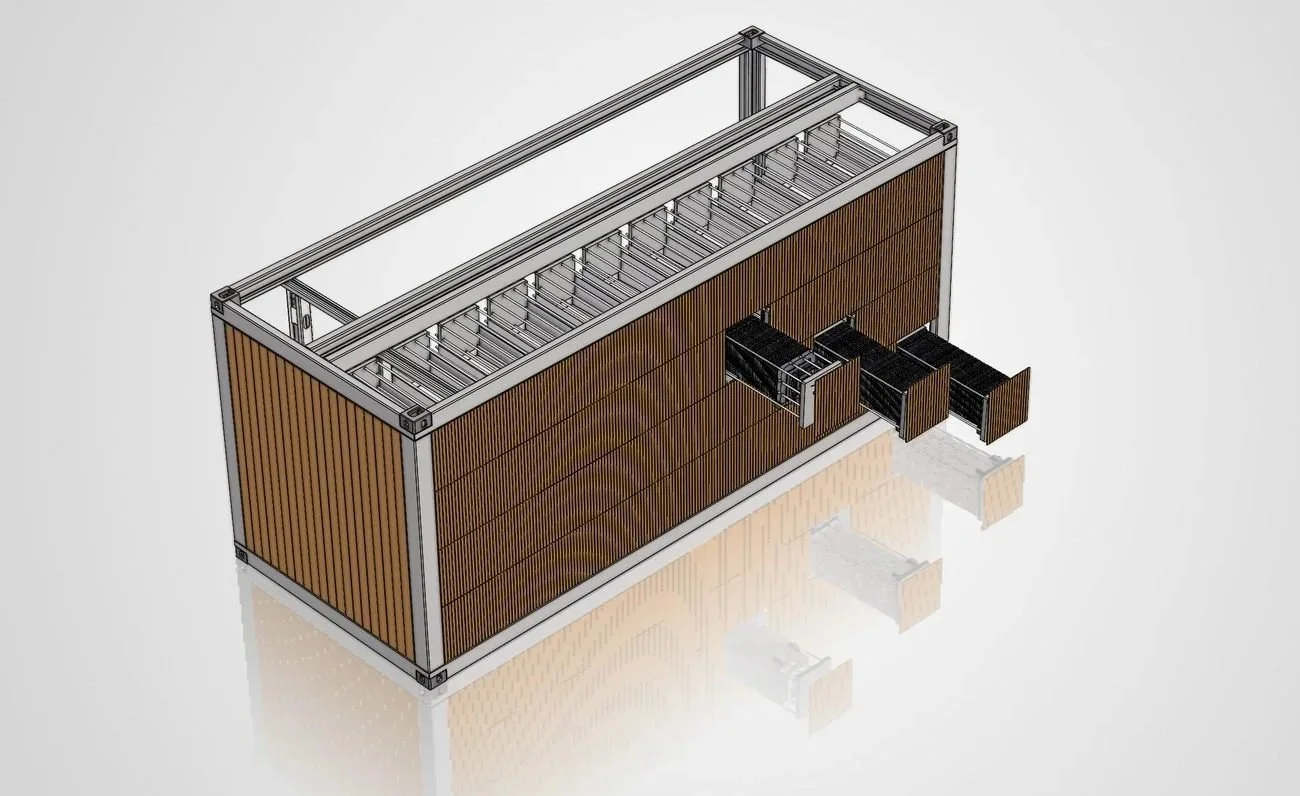
The H-Lyzer turns renewable electricity into hydrogen at pressure. It is designed for high efficiency, low-cost manufacture and highly flexible operation, so projects can buy power in the cheapest hours of the market.
44 kWh/kg target at the site boundary
Hydrogen at 35 bar(g) without a compressor
Unlimited starts and stops
LONG-DURATION ENERGY STORAGE
H-Battery
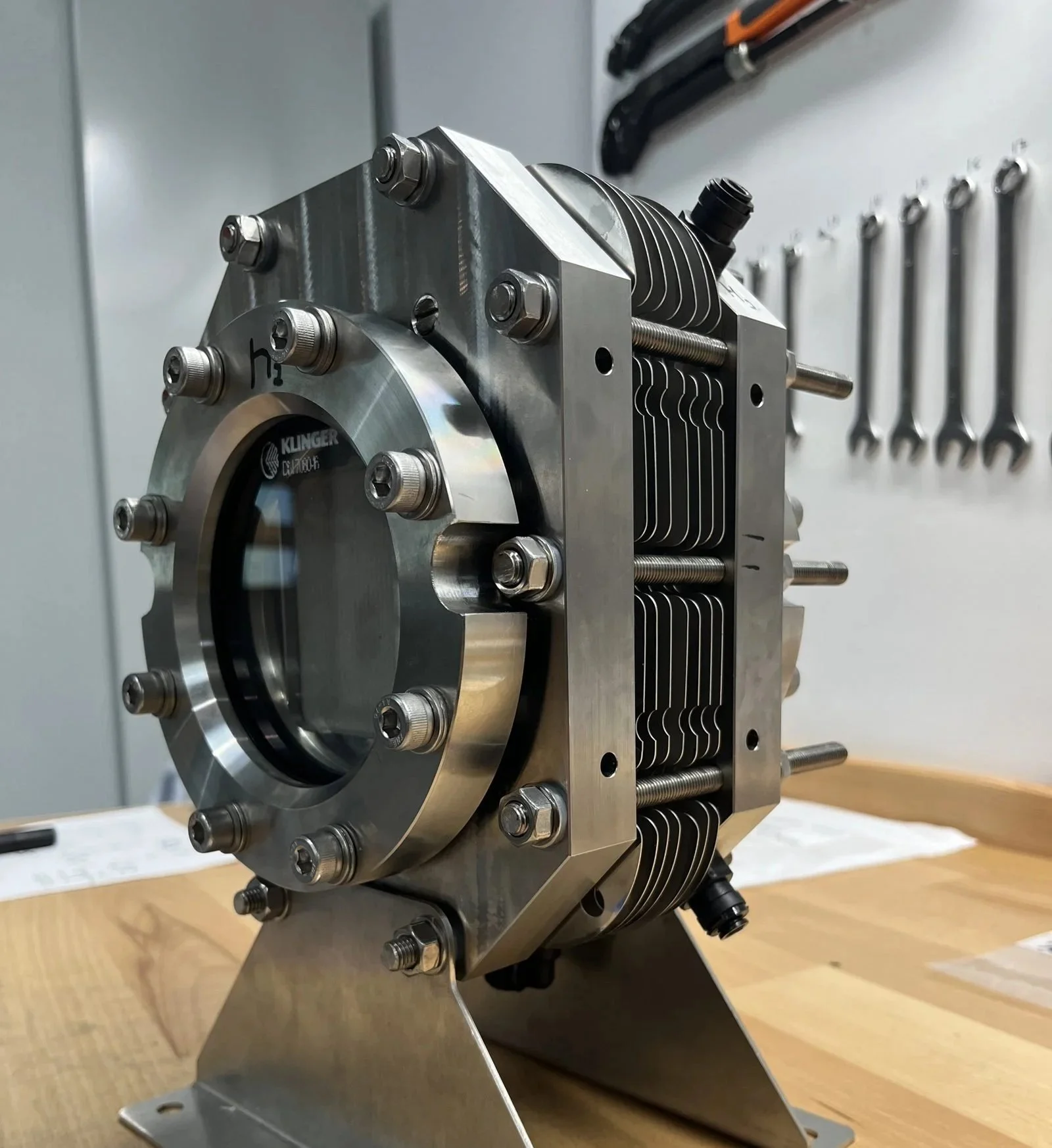
The H-Battery stores surplus renewable electricity as hydrogen and turns it back into electricity and heat when it is needed, from daily swings to seasonal balancing.
One stack for electrolysis and fuel-cell operation
Modular, containerised design
No rare earth materials
What we know
Solar and onshore wind are among the most cost-effective ways of producing electricity
Their production fluctuates over hours and days, driven by weather conditions rather than demand
Batteries can balance short-term fluctuations, while longer-duration flexibility calls for complementary solutions
When clean electricity is unavailable or insufficient, demand is met through higher electricity prices and, in many cases, fossil-based backup generation. As renewable energy scales, aligning supply with real demand becomes a central challenge of the energy transition.
A reliable way forward
Clean electricity can be stored when there is plenty and used when it matters.
shiptown provides a clean energy storage approach that helps keep power reliable, affordable and available, day and night, summer and winter.
The solution exists.
What this means in everyday life?
Charging your car when you get home.
Heat and power on cold, calm nights.
Reliable electricity when everyone turns things on at once.
Everyday power that works when it’s needed — without thinking about it.
Built on technology proven in NASA programmes.
Our technology delivers stable, dispatchable, and sustainable clean energy. It supports large-scale renewable integration and strengthens the resilience of existing and future energy systems.
Our patented H-Battery combines electrolysis and fuel cell technology into a single core.
It converts surplus renewable energy into hydrogen and back to power when required. The system achieves high efficiency through a simple, robust design using no rare earth materials and enabling low-cost hydrogen storage.
H-Battery features
H-LyzerH-Lyzer features
44
kwh/kg
Target electricity use at the site boundary, including rectifier and auxiliaries: about 75.8% efficiency (LHV). Today's commercial systems use 52-56 kWh/kg.
€1,600
/kW
Target fully installed* capex, based on a complete, costed bill of materials
35
bar(g) · >99.9%
Hydrogen at pressure and purity without a compressor, from a system designed to PN63.
0
PGMs , 0 PFAS
No platinum-group metals and no PFAS in any component, including gas-tight seals. Common steel grades, operation below 120 °C.
<10
seconds
Full electrical ramp-up or ramp-down, with unlimited starts and stops per day and per year.
40
stacks per 20-ft container
Compact modules with minimal balance of plant. Stacks can be hot-swapped while the module keeps producing.
Design targets from shiptown's company statement (November 2026). Measured to date: 90% system efficiency (HHV basis, about 43.8 kWh/kg) on a five-cell stack.
WHY EFFICIENCY AND FLEXIBILITY MATTERBuilt for the cheapest hours of the power market
Firm, round-the-clock power from dedicated wind, solar and gas plants costs €102-128/MWh. In the same markets, the grid's cheapest 4,000 hours cost €26-55/MWh, including grid fees, taxes and levies. An electrolyser that can start, stop and ramp freely can buy those hours.
€ 3.82
/kg
Lowest modelled cost of hydrogen in Germany
€ 1.54-2.17
/kg
In Finland, northern Sweden and northern Norway
€ 0.94-1.95
Lower than a pressurised alkaline benchmark in all seven European markets modelled
/kg
Modelled by sbh4 consulting, shiptown's strategic advisor (white paper, November 2026): 100 MW plant, 44 kWh/kg, €1,600/kW fully installed, 10%/yr capital charge, day-ahead prices October 2023-September 2026 plus grid fees, taxes and levies. Excludes O&M, stack replacement and water. These are modelling results, not offers to supply hydrogen at these prices.
H-Battery: clear value for every stakeholder across the energy system.
-

Renewable energy developers and asset owners
Improve project economics
-
Utilities, DSOs & TSOs
Ensure grid stability
-

Critical infrastructure operators
Ensure stabile electricity supply
-
Hydrogen producers and industrial users
Unlock hybrid revenue streams across power markets
-

Maritime and port operators
Comply with ECA requirements
Partners
We work with leading public institutions and industry partners to scale hydrogen battery technology and decarbonise the energy sector.











TESTIMONIALSWhat You Might Be Wondering
-
shiptown develops and delivers low-cost, highly efficient and flexible energy solutions that make renewable power reliable and dispatchable. Our technology helps energy developers, data centres, operators of critical infrastructure and the maritime sector store surplus renewable electricity and deliver clean power when it is needed most.
-
The H-Battery is a reversible energy system that works both as an electrolyser and as a fuel cell. It converts surplus renewable electricity into hydrogen for storage and later converts that hydrogen back into electricity and heat. This makes it possible to balance renewable energy supply and demand over longer periods than conventional batteries.
-
Conventional batteries are well suited for short-duration balancing, typically hours. The H-Battery is designed for medium- to long-duration energy storage, from daily to multi-week cycles. By using hydrogen as the storage medium, the system can store large amounts of energy without the material constraints or degradation challenges associated with battery storage.
-
As renewable energy production increases, electricity supply is often misaligned with demand. This leads to curtailment, grid congestion and reliance on fossil backup. The H-Battery addresses this by storing surplus renewable power and releasing it as clean, dispatchable energy, improving grid stability and system resilience.
-
The H-Battery is designed for organisations that depend on reliable, low-carbon energy, including:
Renewable energy producers and developers
Utilities, grid operators and TSOs
Data centres and operators of critical infrastructure
Power-to-X and hydrogen infrastructure projects
Maritime and industrial applications
-
Many of the applications we serve, such as data centres and critical infrastructure, require extremely high uptime. Reliability is therefore a core design principle. The H-Battery is engineered for long operational lifetimes and stable performance under real-world operating conditions, not just laboratory environments.