
h-lyzer productThe H-Lyzer
A paradigm-shifting electrolyser for low-cost green hydrogen
A new cell and stack architecture designed for high efficiency, low-cost manufacture and highly flexible operation with renewable electricity, delivering hydrogen at pressure without a compressor.
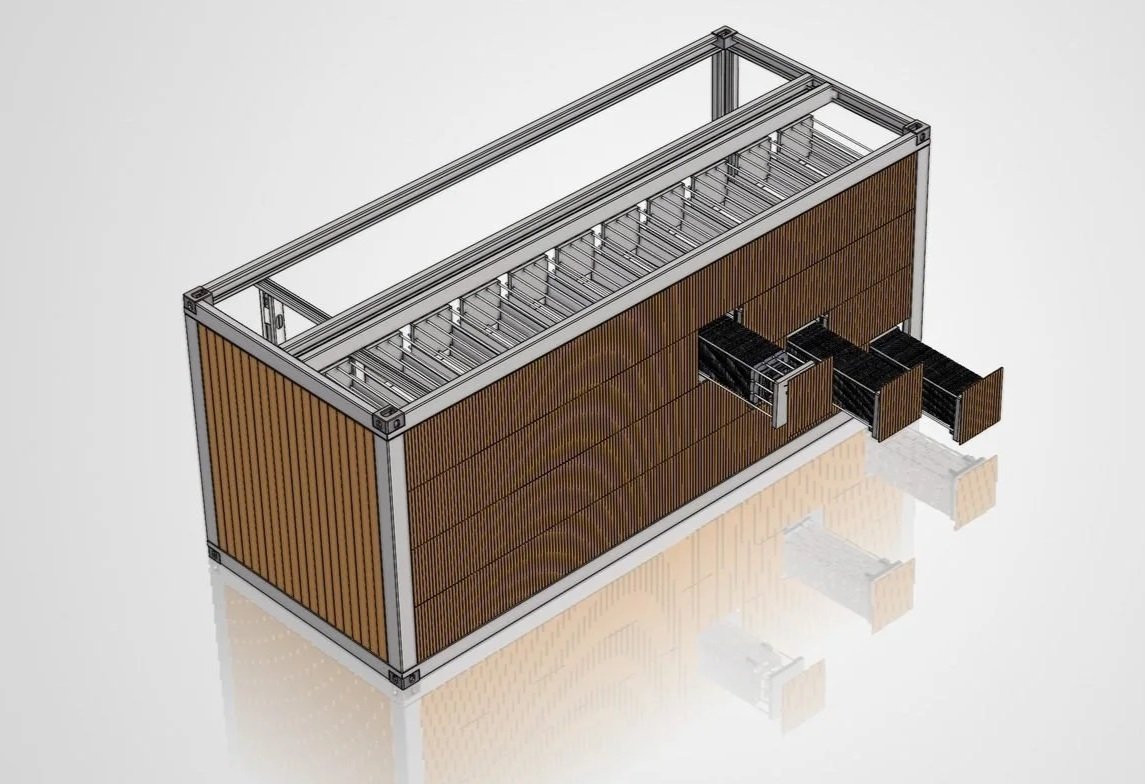
Containerised 40-stack H-Lyzer module (render). Power management equipment sits in a separate container.
Key figures
44
kwh/kg
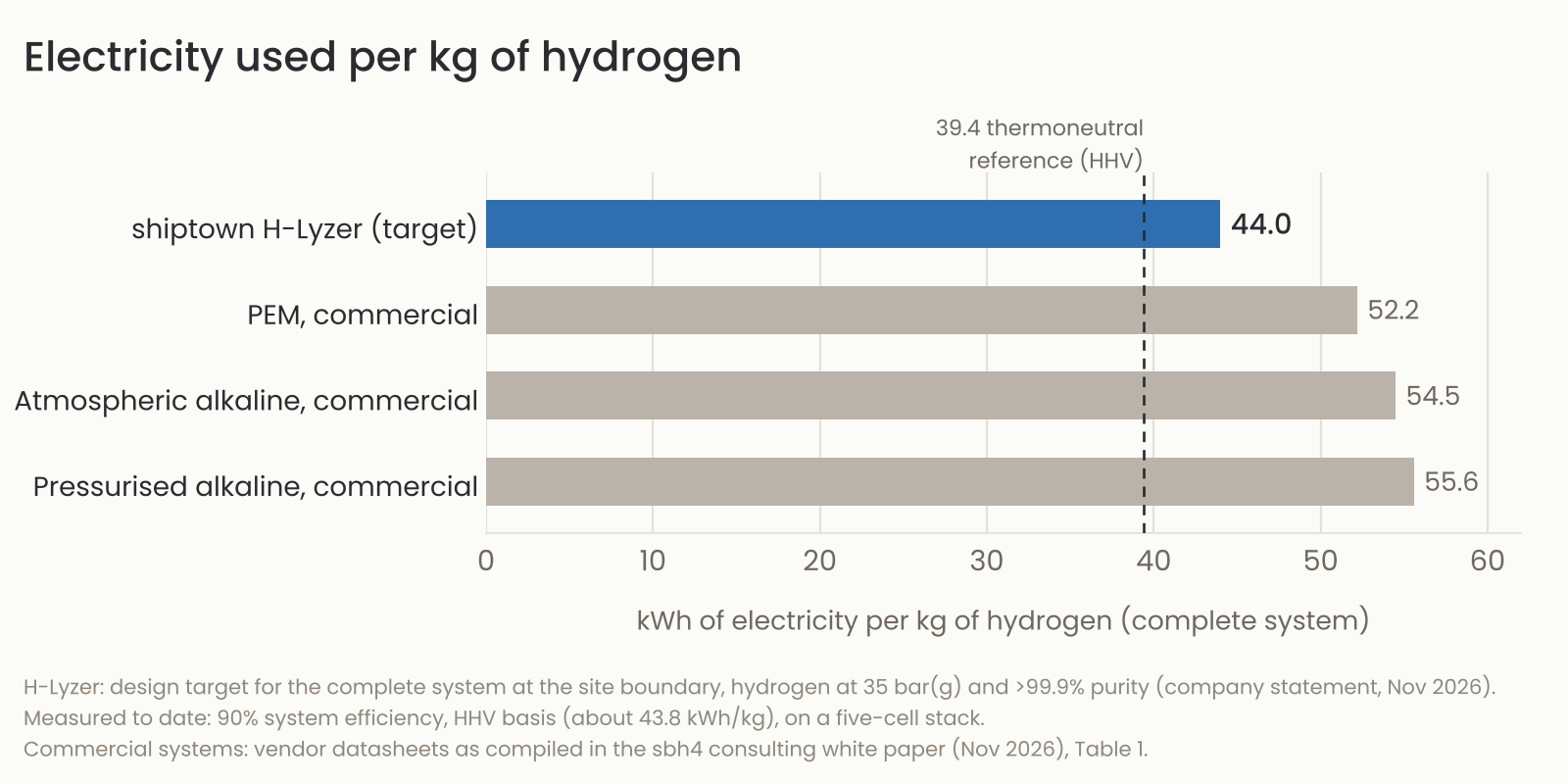
Target at the site boundary, including rectifier and auxiliaries. About 75.8% efficiency (LHV)
<5%
warm standby
Of nominal power. In cold standby, only controls and safety systems need power.
35
bar(g) >99.9%
Hydrogen at pressure and purity without a compressor. System designed to PN63.
0
PGMs , 0 PFAS
In any component, including gas-tight seals. Common steel grades, below 120 °C.
<10
seconds
Full ramp of electrical input. Unlimited starts and stops per day and per year.
40
stacks per 20-ft container
Stacks can be hot-swapped in pairs during operation, ensuring uninterrupted hydrogen supply.
MEASRUED TO DATE
90% system efficiency (HHV basis, about 43.8 kWh/kg) on a five-cell stack. Pressure tested above 35 bar.
HOW IT WORKSEfficiency from the cell architecture
The H-Lyzer uses an alkaline electrolyte, but its cell and stack work differently from conventional alkaline electrolysers. Four design features create the advantage.
Design featureWhat it doesCeramic-type insulation between the electrodes, instead of a polymer membrane or diaphragm
Simple zero-gap cell: the electrode is in direct contact with the bipolar plate
Allows a higher operating temperature than today's alkaline cells, still below 120 °C
Minimises ohmic resistance in the electrochemically active parts of the cell
why it mattersVery high electrolyte conductivity and efficient water splitting
Target of 44 kWh/kg at the site boundary
Hydrogen and oxygen produced at separate locations, three cell layers apart
Several physical mechanisms prevent the gases from mixing
Intrinsically safe design, >99.9% purity and flexible operation
Hydrogen generated at pressure inside the stack
No compressor and no inter-stage cooling water
Hydrogen at 35 bar(g) with less equipment and less power
No catalysts are used today; they remain an option for future development. Because the process uses more than the thermoneutral 39.4 kWh/kg, it produces its own heat: no external heat is needed during ramp-up or operation.
Flexible operationDesigned to follow the power market
A plant that buys only the cheapest hours starts and stops, typically every day. The H-Lyzer treats cycling as normal operation.
Unlimited starts and stops, per day and per year, so no large battery buffer is needed.
Full ramp of electrical input in under 10 seconds. Gas output follows within tens of seconds to a few minutes as pressure stabilises.
Warm standby below 5% of nominal power. Cold standby powers only controls and safety systems.
Tolerates instantaneous loss of power, supporting grid-balancing services and proposed EU shut-off rules.
No noticeable stack degradation or efficiency loss so far with frequent shutdowns. Long-duration data will come from bankability-grade testing from 2027.
MATERIALS AND MANUFACTURINGDesigned for industrial manufacturing
The future cost of electrolysis will be decided on the factory floor. The H-Lyzer uses simple components, abundant materials and established industrial processes.
No PGMs
No platinum-group metals in any component.
No cooling water
Total water use at or below state-ofthe-art electrolysers. Suits hot, humid sites.
No PFAS
None in any component, including gas-tight seals.
Costed bill of materials
Cell, stack and system bill of materials complete and costed. Stack and module assembly line designed, sized and costed.
Common steels and processes
Alkaline pH and operation below 120 °C allow commonly available steel grades.
High European content
Planned for components and assembly, to meet 'Made in Europe rules proposed in the Industrial Accelerator Act and EU grant programmes.
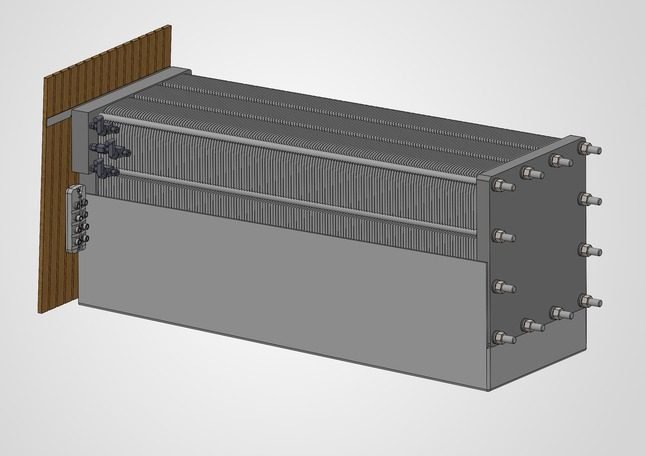
H-Lyzer stack (render)
SYSTEM DESIGNCompact, maintainable modules
Each standard 20-foot container module houses 40 stacks. Single stacks can be hot-swapped for inspection or maintenance while the others keep producing, so hydrogen supply is uninterrupted.
The system is designed to PN63, a nominal pressure of 63 bar(g), and delivers hydrogen at 35 bar(g). Where users need higher pressure, compression starts from 35 bar(g) rather than near atmospheric pressure.
EFFICIENCYEfficiency counts twice
Lower electricity use cuts the power bill per kilogram. Because electrolysers are priced per kW of input, it also spreads the capital cost over more kilograms.
A 100 MW grid connection produces about 26% more hydrogen at 44 kWh/kg than at 55.6 kWh/kg: 2,273 kg/h against 1,799 kg/h.
Every kWh/kg saved is worth about €0.05 per kg of hydrogen at a power price of €50/Mwh.
DEVELOPMENT STATUSRoadmap to bankable 100 MW projects
TodayTRL 4 completed. Equipment being built to complete TRL 5. Component designs and manufacturing tolerances being validated.
2027Materials optimisation, cell validation and bankabilitygrade testing of preproduction stacks.
Mid 2028TRL 6 completed at a confirmed test site. The first H-Lyzer demonstration, at European Energy's site in Denmark, is planned for 2028.
End of decadeScaled component production, system assembly and go-tomarket.
from 2030Bankable equipment able to support 100 MW projects reaching commercial operation.
Proprietary aspects of the technology are protected by more than 20 patent applications, including five international (PCT) filings.
Grant funding is secured for the full TRL 6 consortium, with construction partners involved.
Timing is shiptown's plan as of November 2026 and depends on financing.
Developed with
Strategic partner
European Energy: investor, board member and host of the first H-Lyzer demonstration
Product sponsor
Siemens
Research partners
DTU
Aalborg University
FORCE Technology
Industry & manufacturing
init
ECM Industries
AMES
AE Partner
Planning a green hydrogen project?
Tell us about your site, power supply and hydrogen demand. We will share technical information and our development timeline.
Performance values are design specifications from shiptown's company statement (November 2026) unless marked as measured. Statements about future development, timing and financing are forward-looking and may change.